Overproduction vs. Fast Improvement Cycles

A couple of weeks ago ago I posted the question “Are you overproducing improvements?” and compared a typical improvement “blitz” with a large monument machine that produces in large batches.

I’d like to dive a little deeper into some of the paradoxes and implications of 1:1 flow of anything, improvements included.

What is “overproduction” – really?

In the classic “7 wastes” context, overproduction is making something faster than your customer needs it. In practical terms, this means that the cycle time of the producing process is faster than the cycle time of the consuming process, and the producing process keeps making output after a queue has built up above a predetermined “stop point.”

If the cycle times are matched, then as an item is completed by the upstream process, it is consumed by the downstream process.

If the upstream process is cycling faster, then there must be an accumulation of WIP in the middle, and that accumulation must be dealt with. Further, those accumulated items are not yet verified as fit-for-use by the downstream process that uses them.

The way this applies to my “Big Improvement Machine” metaphor is that we are generating “improvement ideas” faster than we can test and incorporate them into the process.

“Small Changes” Doesn’t Mean “Slow Changes”

No matter how good your solution or idea, it is just an academic exercise until it is anchored as the an organizational norm. The rate limit on improvement is established by how quickly people can absorb changes to their daily, habitual routine.

Implementing and testing small changes one-by-one is generally faster than trying to make One Big Change all at once. When we do One Big Change, it is usually actually a lot of small changes.

I hear “we don’t have time to experiment,” but when I ask what really happens if a big change is made, what I hear almost every time is they had to spend considerable time getting things working. Why? Because no matter how well the Big Change was thought through, once you are actually trying it, the REAL problems will come up.

Key Point #1: Don’t waste time trying to develop paper solutions to every problem you can imagine. Instead, “go real” with enough of the new process to start revealing the real issues as quickly as possible.

In other words, the sooner you start actively learning vs. trying to design perfection, the quicker you’ll get something working.

Slow is Smooth, Smooth is Fast

Your other objective here is to develop the skill within the organization to test and anchor changes quickly, as a matter of routine. This will take time.

When we see a high-performance organization making rapid big changes, what we are typically seeing is making small changes even more rapidly. They have learned, through practice over time, how to do this. It isn’t reasonable to expect any organization to immediately know how to do this.

Key Point #2: If managers, or professional change agents (internal or external consultants, for example) are telling people exactly what to do, this learning is not taking place.

It is critical for the organization to develop this learning skill, and they are only going to do it if they can practice. Learning something new always involves doing it slowly, and poorly at first. If your internal or external consultants are serving you, their primary focus is on developing this basic competence. Their secondary focus is on getting the changes into place. This is the only approach that actually strengthens the organization’s capability.

The same is true for an operational manager who “gets” lean, but tries to just direct people to implement the perfect flow. It will work pretty well for a while. But think about how you (the operational manager) learned this stuff: Likely you learned it by making mistakes and figuring things out. If you don’t give your people a chance learn for themselves, you limit the organization in two ways:

  1. They will never be any better than you.
  2. They will wait to do what they are told, because that is what you are teaching them to do.

Think about what you want your people to be capable of doing without your help, and make sure you are giving them direction that requires them to practice doing those things. It will likely be different than telling them what they layout should look like.

Improve your Cycle Time for Change

Coming back to the original metaphor, if you want fast changes to last, you have to work speeding up the organization’s cycle time for testing improvement ideas. Part of this is going to involve making that activity an inherent and deliberate part of the daily work, not a special exception to daily work.

Part of that is going to be paying attention to how people are working on testing their ideas. The Improvement Kata and Coaching Kata are one way to learn how to deliberately structure this work so that learning takes place. Like any exponential curve, progress seems painfully slow at first. Don’t let that fool you. Be patient, do this right, and the organization will slingshot itself past where you would be with a liner approach.

Small changes, applied smoothly and continuously become big changes very quickly.
Heavy Equipment Overhaul: Flow at Takt in 1938!

This is a great contemporary film from 1938 describing the complete overhaul of a mainline 4-6-0 steam locomotive in the U.K.

What is interesting (to me) is:

  • The overhaul involves stripping the locomotive down to individual parts. Each of the parts, in turn, flows through a process of inspection / repair or replacement, with a strict timing to ensure it is delivered back to re-assembly when required.
  • There are 6 positions with a takt time of 10 hours 44 minutes. Everything is timed to this cadence.
  • I can only speculate, but with that degree of rigor in the timing, they are going to be able to see a delay or problem very quickly, and get out in front of it before it causes a delay in the main-line work.
  • The parts that come off are not necessarily the exact once that are put back on. Everything is flowing – there are multiple locomotives in overhaul.

More thoughts below the video.

(Here is a direct YouTube link for those who don’t get the embed in the email subscription: https://www.youtube.com/watch?v=ktHw1wR9XOU)

Flow in Overhaul and Repair

This is a great working example of a process flow that proves difficult for some organizations: Overhaul and repair. “We don’t know what we will find, so there is no way we can sequence and index it on a timetable.”

I’ve seen a similar operation overhauling helicopters. The intended flow was exactly the same.

  • Like the locomotive flow, they stripped everything down to the airframe. The various components had different flow paths for sheet metal, hydraulic components, power-train (engine / transmission), rotor components, electrical, avionics, and composite parts.
  • The objective was to deliver “good as new” items on time back to the re-assembly process.

Here is where they ran into problems:

  • If an item needed repair, then the repairs were done, and the item flowed back.
  • But if an item could not be repaired (needed to be scrapped and replaced) it was tagged, and returned to the “customer” – the parts bin in main assembly. It arrived just like any other part except this one was tagged as unusable. It was up to the assembly supervisor to notice, and initiate ordering a new one.

Who is your customer? What do they need?

The breakdown was that the repair line(s) saw themselves as providing a repair service. If it couldn’t be repaired, sorry.

What their customer needed was a good part to install on the helicopter. If they can create a good part by repairing the old one, great. But if it isn’t repairable, their customer still needs a good one and they need it on time.

The Importance of Timing and Sequencing

In the locomotive video, they emphasize the precise timing and sequencing to make sure each part arrives in the proper sequence, when it is needed, where it is needed.

Even if it actually worked like they describe, I can be sure it didn’t work like that when they first started.

The timing and sequencing is a hypothesis. Each time they overhaul a locomotive, in fact each individual part flow, is an experiment to test that hypothesis. Over time, it is possible to dial things in very precisely.

Why? So you can quickly identify those truly anomalous conditions that demand your intervention.

Normal vs Abnormal

Just because there are frequent issues does not negate the fact that most of the time things can probably flow pretty well. What we tend to do, however, is focus on the problem cases and give up on all of them. “What about this? What about that?” bringing up the legitimate issues and problems, causes us to lose sight of the fact that underneath it all there is a baseline pattern.

What is important is to define the point at which we need to intervene, and set up the process to detect that point. When we can clearly distinguish between routine work and true exceptions, and not try to treat everything as a special case.

Are You Overproducing Improvements?

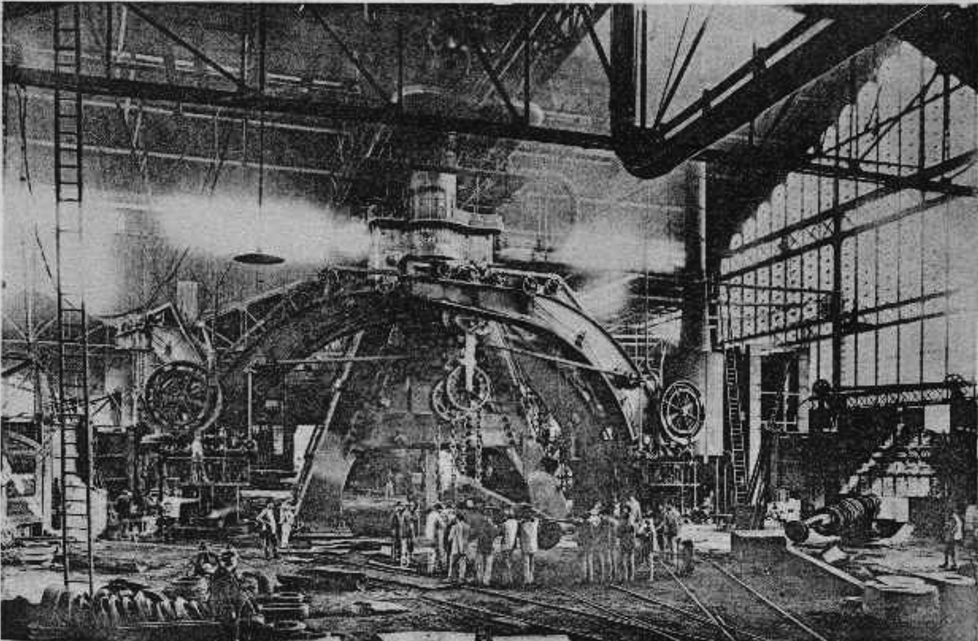
Imagine a factory with a large monument machine. It takes several days to set up. When it does run, it runs very fast, much faster than you can actually use its output. Therefore, you take the excess output and store it to use later. Actually, you don’t know how many items you need to make, so you make as many as you can while the machine is available to you.

image

Some of that excess output may prove to be less useful than you thought, but there is pressure to use it all anyway since it was so expensive to produce.

After a run making items for one process, you change it over to make items for a different process, and build up a queue of output there.

When all of the output is used, it all may or may not work the way you expected it to.

Most of us would see this as a classic case of “overproduction” – overwhelming the system with excess output that hasn’t been checked for quality, that isn’t needed right now, and might or might not be useful in the future. But it seemed like good efficiency to make it while we could.

Our lean thinking tells us we want to do a few things here. Ultimately, we want to work hard to break up the batches, and make the value flow more evenly to each of the customer processes, and ultimately to the end customers. The work we must do to keep things moving smoothly and evenly will pay off in both tangible and intangible ways.

One of the primary reasons we push hard for 1:1 flow in the lean world is to enable one-by-one confirmation.

We want to test each item of output to confirm that it actually performs as expected rather than making lots of them without knowing if they are any good.

How Do You Produce Improvements?

Now, imagine doing improvements this way. What would it look like?

A process would be scheduled to receive the rapid output of the Improvement Machine.

The Improvement Machine would be set up over a period of several days to produce improvements for the target process.

Once it was running, we would run the Improvement Machine very fast for a week or so. It would produce improvements faster than the target process can really absorb them.

At the end of the run, we might test the improvements as a batch. We might not test them at all, but rather report that they have been implemented with the assumption that they will work. We would also have excess improvements stored on a to-do list for future use.

Those excess improvements might, or might not, prove to be useful, but we would have huge pressure to implement them because they are on the list.

Once the machine was done producing improvements for one process, it would be set up to produce improvements the same way for another.

We would measure how many times we were able to run the improvement machine in a year, not so much the actual sustained impact we were making.

Improvements that were made without the machine might not be measured or credited at all. Or worse, these rogue improvements might actually be discouraged since they are made by people who aren’t certified to run the machine.

Now… substitute “kaizen event” for “improvement machine” and see if it makes any sense.

Why Are Big Batches Necessary?

The reason the Large Monument Machine has to cycle batches of output to different customers is because those customer processes don’t have the internal capability to do what it does. We need an outside resource to do it.

The countermeasure we strive to apply in these cases is to identify the capability that the customer process does need. We then work hard to develop it on a scale they can incorporate into their daily work. This is typically smaller, more specialized, and scoped to their needs.

My purpose here, though, is to apply a metaphor, not to discuss the economics of large capital equipment.

When we “batch improvements” it is often for the same reason: The area that is being improved can’t do it themselves, so we have to dedicate a scarce outside resource – an improvement expert – to lead them through it. Since that improvement leader can’t be there 100% of the time, he has to work as hard and fast as he can when he IS there.

Making Improvements vs. Teaching How to Make Improvements

The countermeasure in both scenarios is the same: Develop the capability within the process. In the case of making improvements, this means asking ourselves “Why can’t they do it?”

All of these are harder than just doing it for them. But if we want improvement to flow, this is the work that must be done.